It turns out I’m slow in processing images and writing posts. I have so much more sympathy to people who post content for a living. How do they do it?! I take back all my snarky thoughts and comments about influencers. Well, most of them.
So I wrote a lot on our flight to South Africa yesterday. Now I need to add photos and either email them, post them on the blog, or both. Joe has been better about posting to the blog, so let me give you the link. It’s https://joeandvelda.blog/. Pretty easy, huh?
Now to the museum!
[April 26, 2026] I had been looking forward to re-visiting the Rijksmuseum, in Amsterdam, for a long time. The last time we were there, in 2018, there were people in costumes, and the curation was fabulous, with multiple modes of learning about the artwork. You felt you were given insider information by a trusted friend. The experience was so good that I signed up for their e-newsletter and read it – in Dutch! – when it arrived. …Okay, I mostly opened it and scanned it, but that’s more than I do with some of my e-newsletters.
It turns out our timing for this visit was not great – it was on a Sunday, the day before King’s Day (Koningsdag), a major national holiday honoring King Willem-Alexander’s birthday. The city was preparing for a crazy time with merry-makers and they had already set up port-a-potties and public urinals at every bridge, or so it seemed.
We started, as some of us do, at the gift shop and it was excellent. I wanted to buy all the blank journals, some of the scarves and jewelry, and many of the post cards. I bought nothing, <sigh>, although I did hesitate at the flower painting postcards.
The special exhibit was our next stop, but about half-an-hour into the exhibit the crowds were getting irritating, so we had early lunch, when we decided to split up for an hour. That of course turned into 90 minutes. The postcards had whet my appetite for flower paintings, something the Dutch and other low-landers have always been good at. I mapped out a list from the museum app with the goal: avoid the milling crowds.
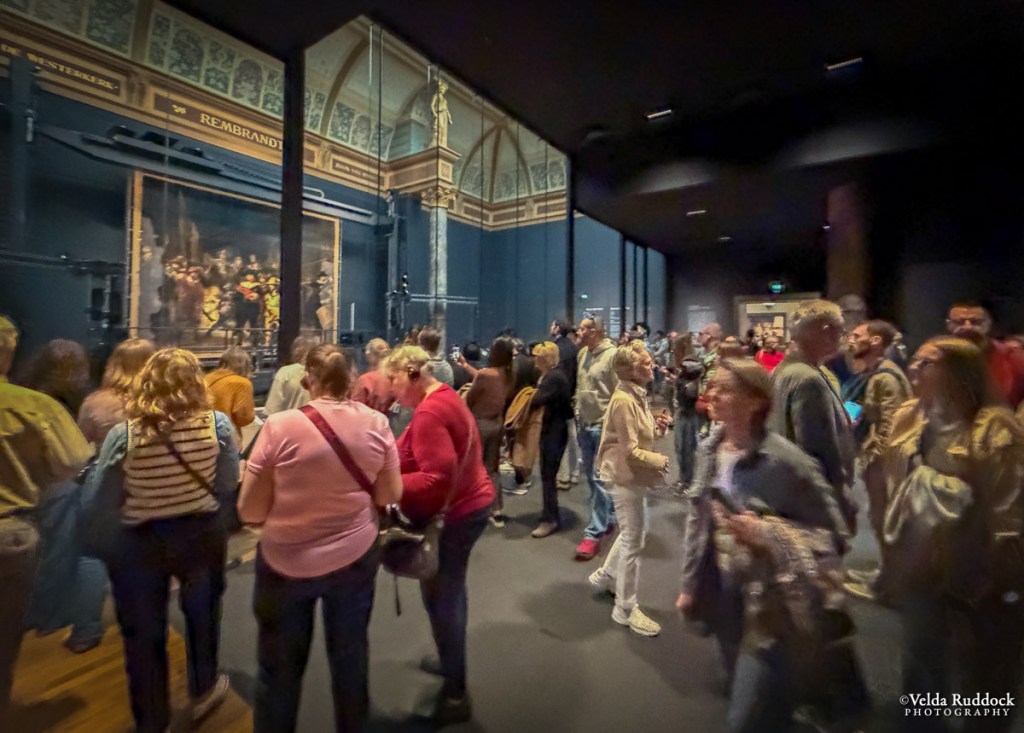
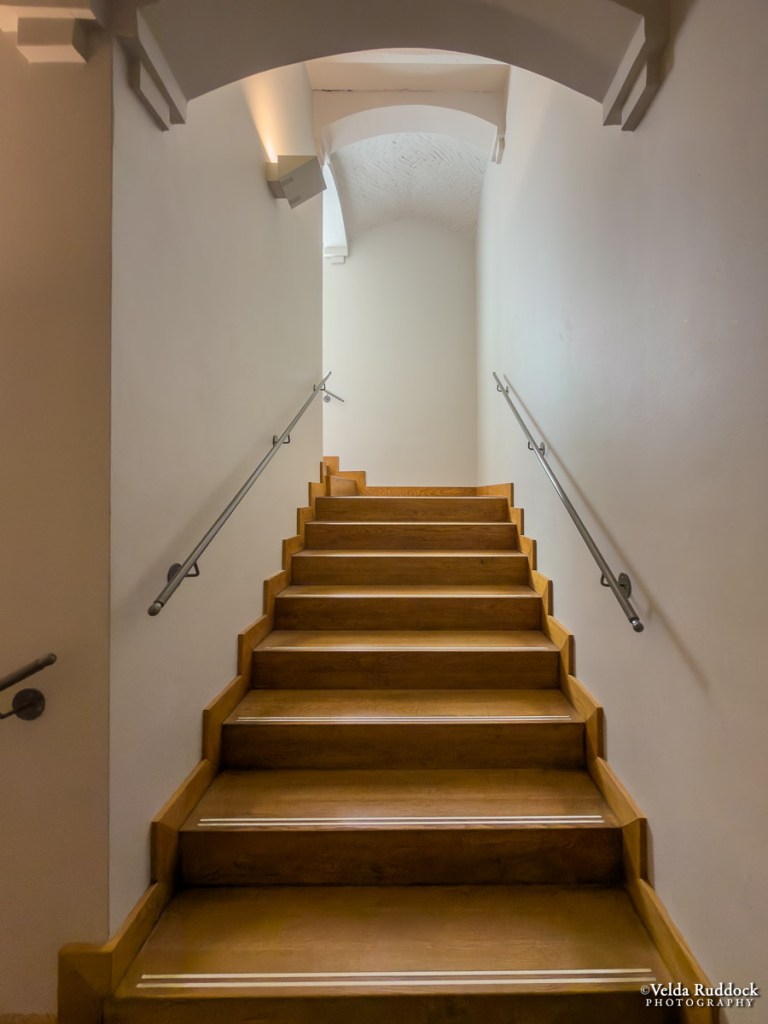
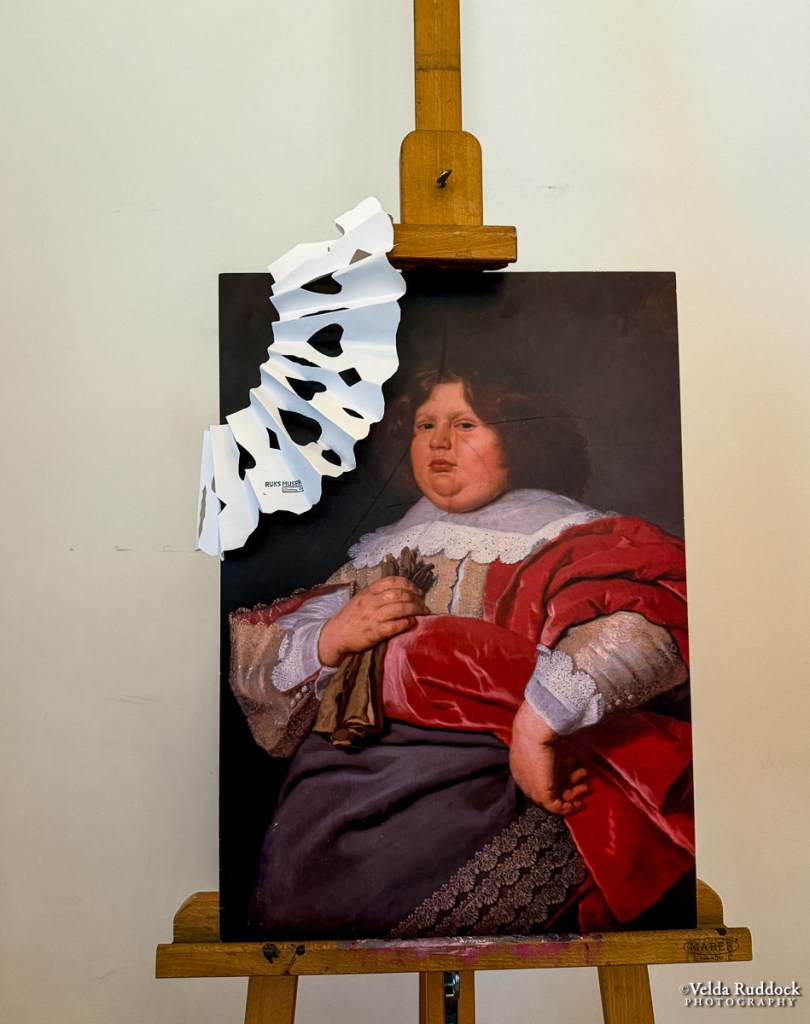
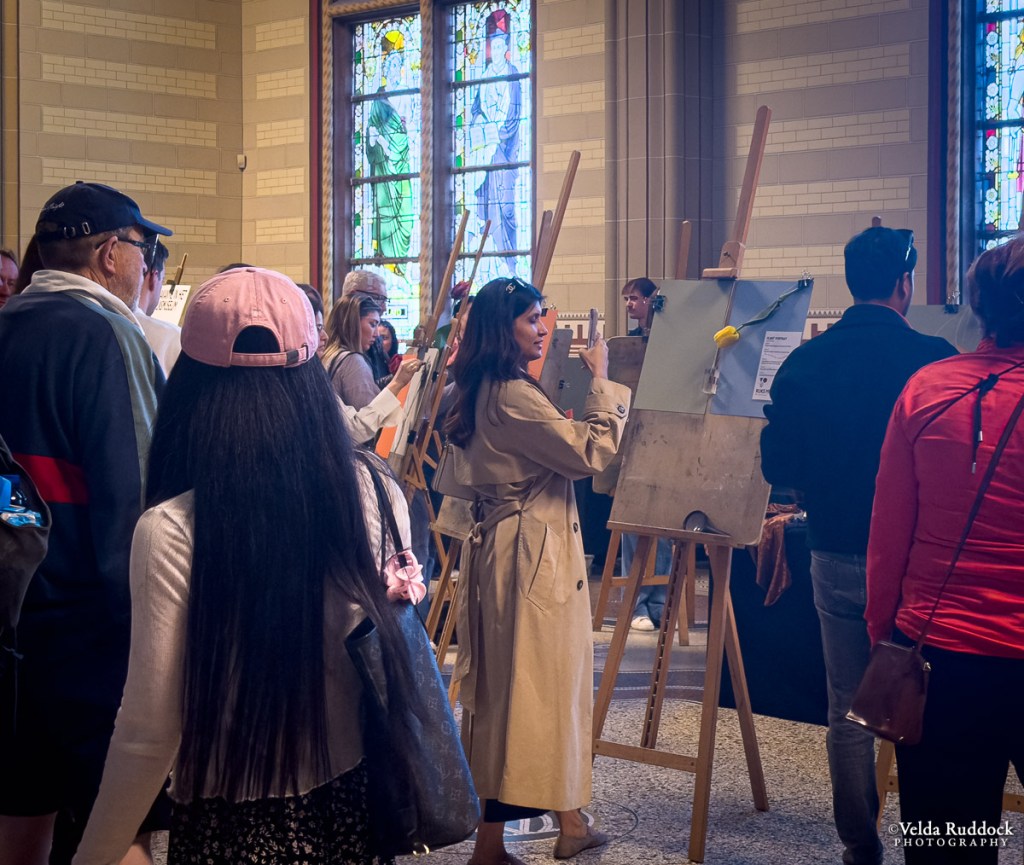
It turns out I’m not good at reading museum maps and it was easy to get side-tracked by all the other beautiful artwork, the great light in the stairwells, and the activities that had been arranged for the visitors here and there.
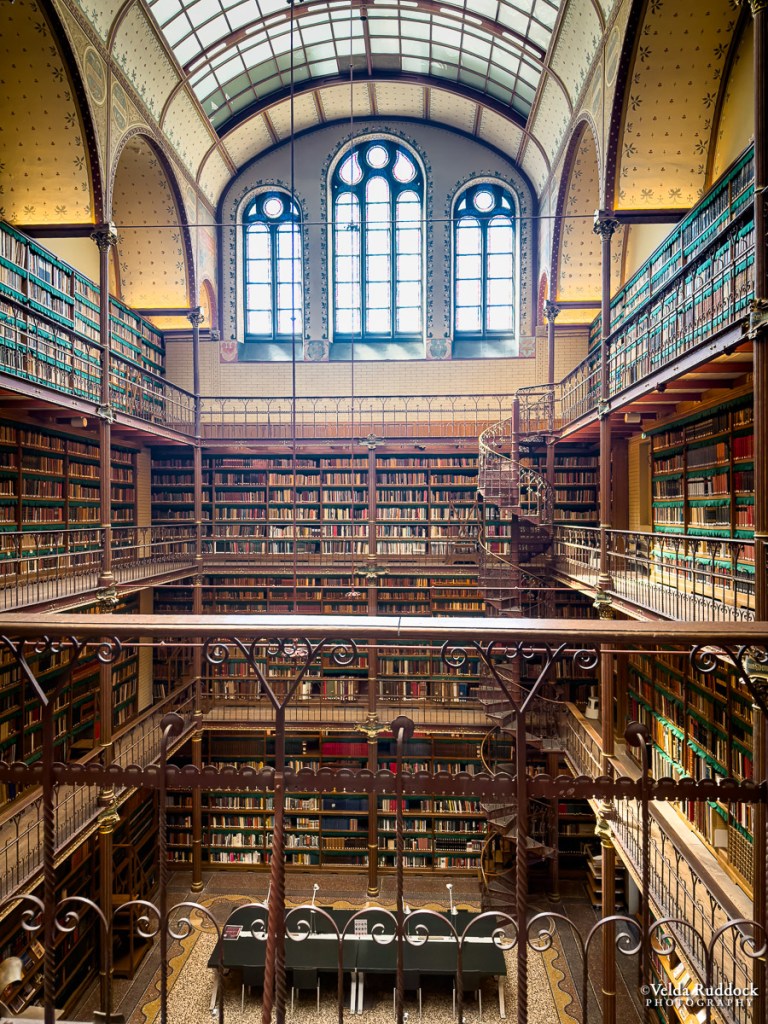
Best of all, I stumbled across the library! We had found this magnificent room years ago and I had hoped to find it again. Some of you may know that I have an MLIS and my background is in research and libraries, so a beautiful library makes my heart beat faster. I took many photos, but this one will give you an idea of this room’s splendor.
So okay, I don’t know what I missed, in the way of flower portraits, and my imaged copies may not be completely true, but here is a feast of some of what I found. Attribution is important so I’ll provide some of the information that were on the cards. For the record, no, I do not aspire to make and photograph bouquets like these, but boy, do I revel in seeing them!
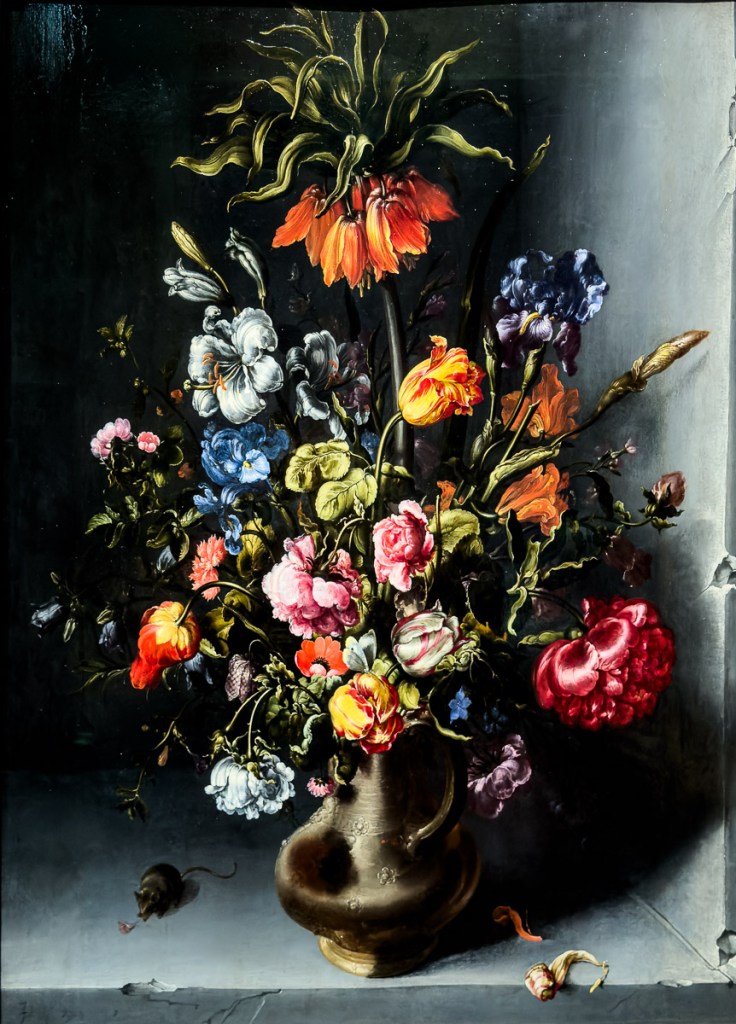
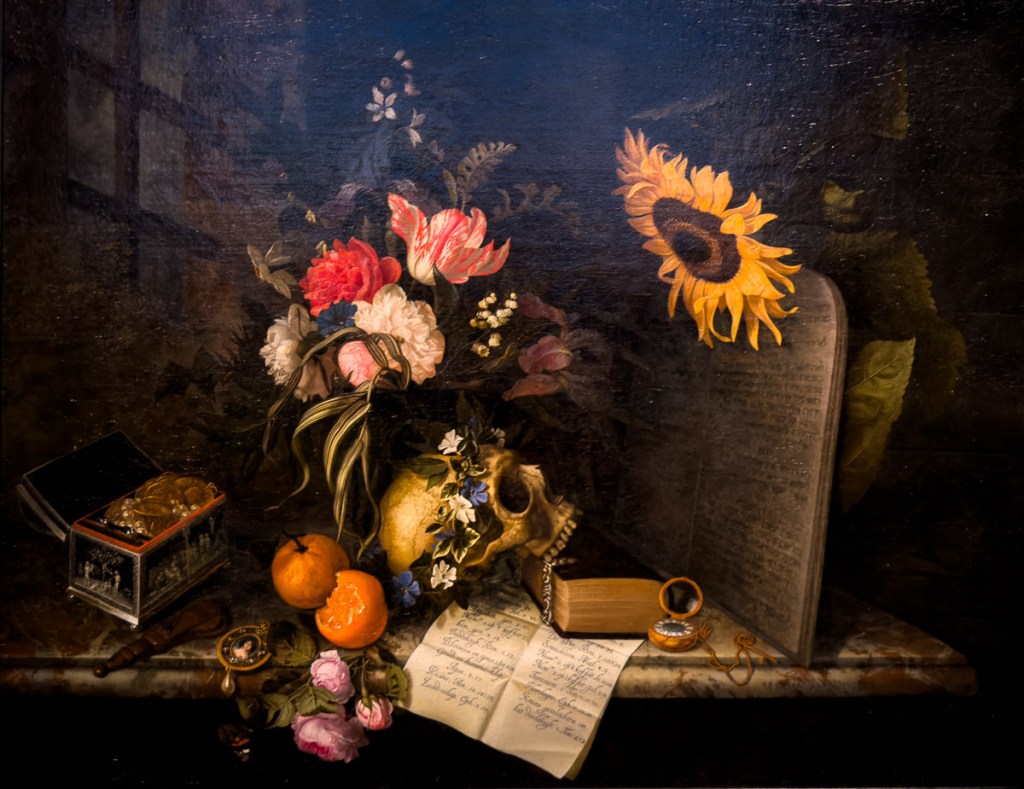
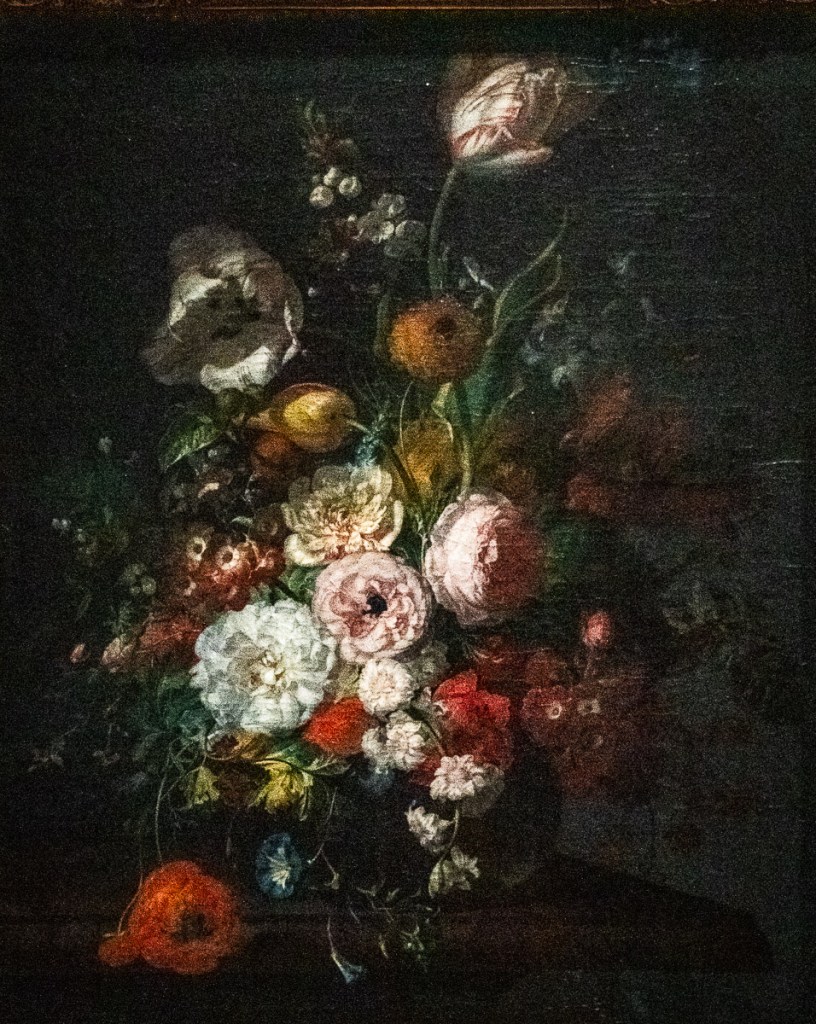
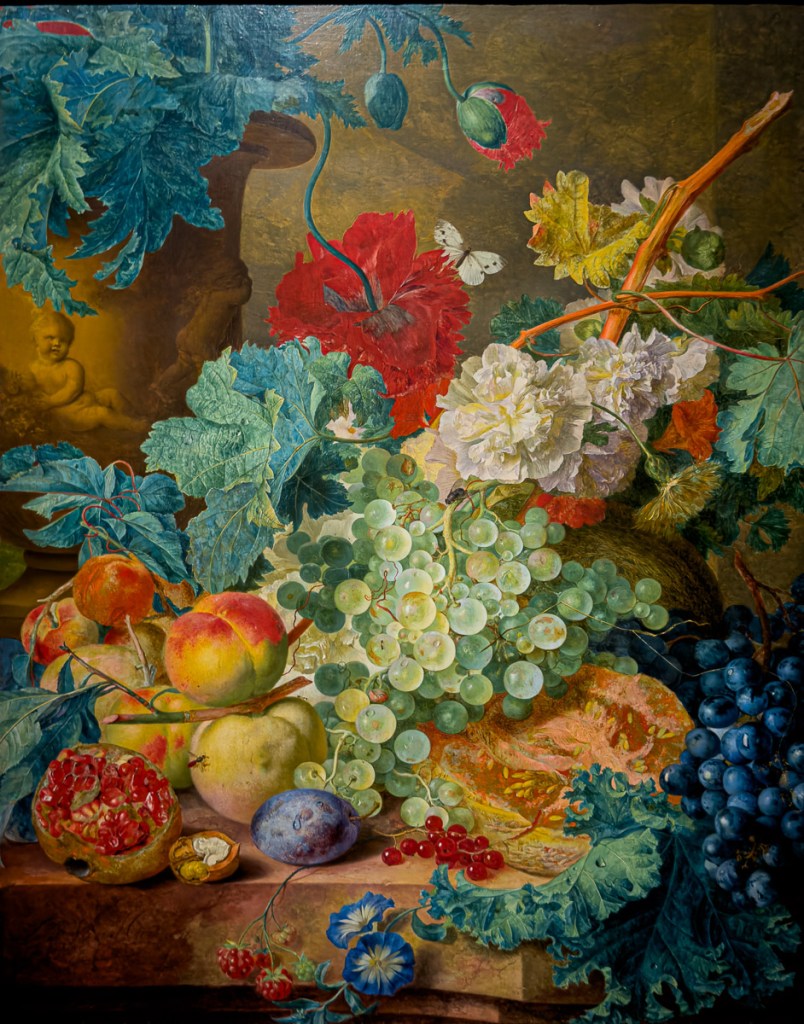
Clockwise, starting top left (you will want to click on these; the program cropped them):
Flower Still Life with a Crown Imperial Fritillary in a Stone Niche (Jacob Woutersz Vosmaer (1584-1641)) – Flower still-life painting is considered a typical Dutch genre, of which this exceptionally large picture is one of the earliest and most spectacular examples. Vosmaer painted a riot of flowers, including rare as well as precious specimens, such as the orange Crown Imperial (top) from Asia. He created a narrative composition by means of the blossoms’ graceful animations, the cracks in the walls, the fallen leaves and the little mouse.
Vanitas Still Life (Maria van Oosterwijck (1630-1693)) – The symbolism in 17th century paintings is often difficult to interpret, but this still life is an exception. On the paper in the foreground, van Oosterwijck included a fitting Bible verse for each detail. The sunflower, for example, represents God, while the floral wreath around the skull symbolizes the “crown of righteousness,” that will be bestowed upon all who love God after death.
Still Life with Flowers in a Glass Vase (Rachel Ruysch (1664-1750)) – Rachel Ruysch was the most famous female artist of her time. Monumental, opulent floral still lifes like this one attracted the attention of wealthy patrons willing to pay prices exceeding 1000 guilders. Even following her marriage, during which she bore ten children, Rusch continued to work and signed her paintings with her own name.
Still Life with Flowers and Fruit (Jan van Huysum (1682-1749)) – As his career progressed, van Huysum produced floral still lifes that were increasingly exuberant. His palette became lighter and more transparent and he set his still lifes against a park-like background. Here the fruit, grapevine and hollyhocks are arranged so loosely and precariously that they risk tumbling from the marble plinth.


Leave a Reply